


Spanky's Zombie Slayer
4.6185.00 Reviews
App Specs
- Version
- 1.11.0
- Updated On
- License
- Free
- Downloads
- 100,000+
- Developer
- Lightheart Entertainment
- Categories
- Arcade
- Platform
- Android
Screenshots
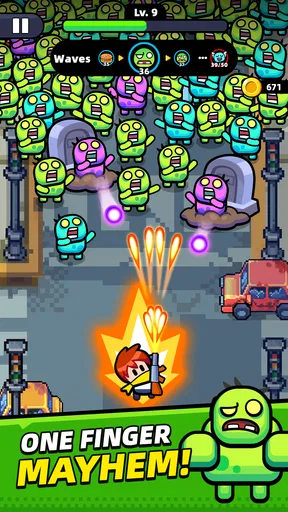
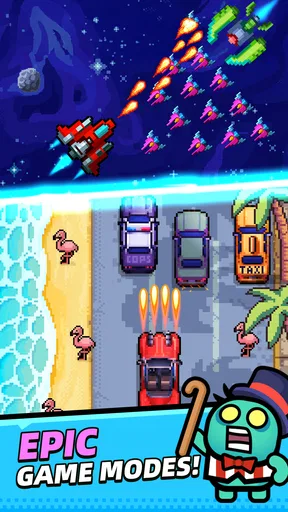
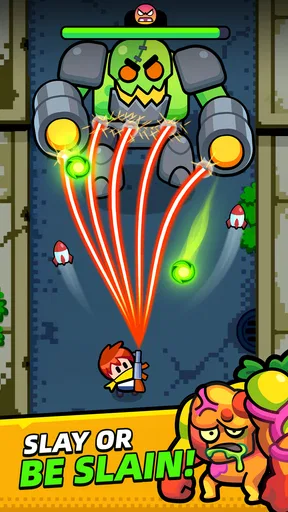
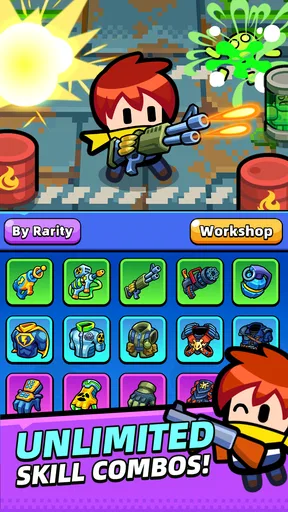
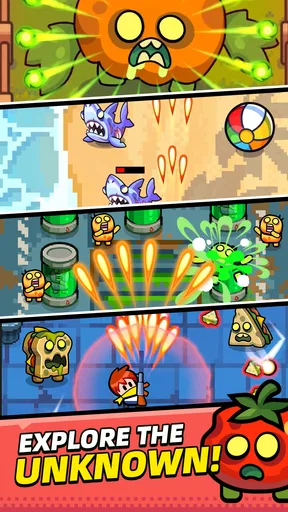
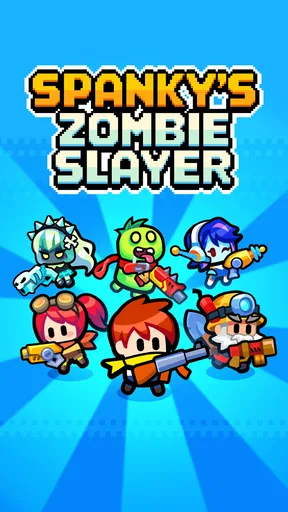
 Analysis by AppCompare
I approached Spanky's Zombie Slayer as a quick arcade game rather than a long-form adventure, and that expectation shaped my experience from the start. Its appeal is easy to understand: it puts a zombie-slaying theme into a compact format that suits short sessions, while keeping the tone lighter than a serious survival game. The store summary asks whether you can slay, and the short description presents it as Spanky’s zombie-slaying game, but the more useful question is whether it fits the way you actually play on a phone.
My answer is that it is best for players who want a free arcade distraction with a clear theme and an uncomplicated reason to keep trying. It is less suitable if you are searching for a deep role-playing system, a story-heavy campaign, or a game that can replace a full console-style zombie experience. Lightheart Entertainment has positioned it in a familiar mobile space, and the result feels most convincing when treated as something to pick up for a few minutes rather than a commitment that demands your entire evening.
How Spanky's Zombie Slayer feels in everyday play
The first thing I noticed is how strongly the game depends on immediate readability. Arcade games live or die by how quickly the player understands what is happening, and a zombie-slaying premise gives the action a natural focus. You are not opening the game to manage a complicated world or study a large collection of systems. You are opening it to deal with a threat, react, and see whether the next attempt goes better.
That makes it a natural fit for small gaps in the day. I can imagine playing it while waiting for a coffee, taking a break between tasks, or using it as a short wind-down before putting the phone away. The important distinction is that these sessions feel intentional rather than incomplete. A quick arcade game does not need to offer a huge map to be worthwhile; it needs to make the first few minutes easy to enter and satisfying enough to repeat.
The zombie theme also gives the action a little more personality than an abstract score-chasing game. Even when the basic loop is straightforward, the setting provides a reason to care about the next encounter. That does not automatically make the game deep, but it helps the short-session structure feel less anonymous.
I would not recommend approaching this as a substitute for a large survival title. Games in that category usually emphasize exploration, crafting, inventory decisions, or a longer progression path. Here, the arcade identity matters more. The attraction is the immediate encounter and the desire to improve your next run, not the promise of building an elaborate survivor story.
Why the speed of a session matters
Because this is an arcade game, perceived speed is more important than the amount of content on paper. I judge a game like this by how quickly I can move from opening it to making meaningful decisions. If the route into play is simple, it becomes much easier to return during a short break. If the game makes me wait, search through menus, or remember too many steps, its strongest use case disappears.
Worth Reading Before You Choose

EA SPORTS FC Mobile 26 Is a Bigger Football Game, but It Takes Time

Flipboard Shows What News Apps Must Do Beyond the Feed

Switching to Android Auto Means Rethinking Your Driving Routine

Google Calendar Makes a Crowded Week Easier to Manage

Ludo King Makes the Most of the Minutes Between Plans

Baby Panda World Brings Quick Play to Modern Phones, but Its Game Library Feels Busy
In practical terms, I would keep it available for moments when I want active entertainment but do not want to begin a lengthy game. That is different from using a puzzle game as a calm background activity. Zombie slaying suggests a more alert kind of break, so it may suit someone who wants a brisk change of pace after work or during a commute, provided the surrounding environment allows attention to the screen.
There is also a useful trade-off here. A focused arcade format can feel pleasantly direct, but it can become repetitive sooner than a game with several unrelated modes. Players who enjoy mastering a narrow loop may see repetition as practice. Players who need constant novelty may interpret the same quality as a limitation. I would decide between those reactions based on your usual habits, not on the zombie theme alone.
What happens during heavier play
The most demanding moments are likely to be the stretches when several threats or decisions compete for attention. Even without treating the game as a hardware benchmark, that is where an arcade title reveals its practical quality. A game can look simple and still feel difficult if visual information becomes crowded or if input timing stops feeling dependable.
My advice is to give yourself a few attempts before judging the difficulty. In a short-session game, an early failure can be useful because it shows which actions deserve priority. Instead of reacting to every movement at once, I would watch for the pattern that causes the run to collapse, then change one habit on the next attempt. This approach is more effective than playing repeatedly without identifying what went wrong.
That is one of the less obvious strengths of this kind of design: a compact arcade loop can make improvement visible quickly. You do not need to remember a complicated quest chain to understand progress. You can compare your decisions from one attempt with the next. The weakness is that this same clarity leaves less room to hide dissatisfaction. If the central action does not hold your interest, there may not be enough surrounding material to rescue the experience.
For longer sessions, I would be more cautious. Repeated action can be enjoyable when I am actively chasing better performance, but it may feel thin when I am simply trying to fill time. I would use the game in bursts and stop when the decisions begin to feel automatic. Returning later with a fresh attention span is likely to be more rewarding than forcing a marathon session.
Stability, recovery, and the practical experience
With a mobile arcade game, reliability is not only about whether it opens. It is also about whether it respects interruptions. Real phone use involves calls, notifications, app switching, low battery, and moments when the player has to put the device down immediately. A game designed for short sessions should fit that reality as gracefully as possible.
When I evaluate recovery, I look for whether returning to the game feels understandable after an interruption. If I have to reconstruct what I was doing, a brief break becomes inconvenient. If the game makes the current state clear, it is much easier to continue or start again without frustration. That matters especially for Spanky's Zombie Slayer because its natural audience is likely to play in small windows rather than reserve a fixed block of time.
I would still avoid assuming that every phone will deliver the same experience. Performance depends on the device, the operating system, available storage, background activity, and the condition of the phone itself. A clean, recently restarted device may feel more responsive than one already handling many demanding apps. That is ordinary mobile reality, but it matters more in arcade play because a delayed response can change the outcome of a run.
My practical routine would be simple: close unusually demanding apps before a longer session, keep the operating system reasonably current, and avoid judging the game while the phone is overheating or nearly out of battery. Those steps do not transform the game, but they remove some avoidable sources of lag and instability. They also make it easier to tell whether a problem comes from the game or from the device around it.
Device limits and what the requirements mean
The listed minimum operating system is Android 7.1, which gives the game a broad compatibility range on the Android side. That is helpful for people who do not own a recent phone, although operating-system compatibility should not be confused with identical performance. A phone that can install a game may still provide a less comfortable experience if its processor, memory, display, or battery is modest.
I would be especially careful with older devices that already struggle with modern games. Arcade controls benefit from consistent response, and a phone that frequently reloads apps or reduces performance under heat may make the game feel harder for the wrong reason. On a newer or well-maintained device, the experience should be easier to assess on its own terms.
The age rating is Everyone 10+, so parents and younger players should still consider the zombie theme and the intensity of the action when deciding whether it is appropriate. The rating does not tell me how every family will react to the presentation, but it does place the game in a space that is less extreme than adult-oriented horror. I would describe it as a casual zombie action choice rather than a graphic survival-horror product.
The game is free to install, which lowers the barrier to trying it. There are in-app purchases ranging from $1.99 to $99.99 per item, however, so I would approach the purchase layer thoughtfully. A free download is convenient, but it does not mean every optional purchase will feel equally reasonable for every player. If you are giving it to someone else’s child, I would review device purchase controls first. If you are playing yourself, decide in advance whether you are comfortable spending or whether you want to treat the free portion as the complete test.
Progress, repetition, and the best way to judge it
My strongest tip is to evaluate the game through a sequence of deliberate short sessions rather than one rushed first impression. The opening minutes tell you whether the theme and controls appeal to you, but they do not always reveal whether the arcade loop has enough tension to support repeated attempts. Play once to learn the rhythm, once to correct a mistake, and then ask whether the third attempt feels like a choice or an obligation.
A second useful approach is to set a personal stopping point. For example, I would play until I notice that I am reacting without thinking, then leave and return later. This protects the game’s strongest quality—quick, active entertainment—from becoming its main weakness. It also gives you a clearer sense of whether you enjoy improvement or merely tolerate repetition.
A third trade-off concerns attention. This is not the best companion for multitasking if the action requires timely reactions. A passive game or an audio-focused app is better when you are cooking, walking, or sharing attention with another task. Spanky's Zombie Slayer makes more sense when you can look at the screen consistently, even if only for a short period.
Another everyday scenario is a parent looking for a free game that can occupy a child briefly without committing to a large download purchase. The age rating and simple zombie premise may make it worth investigating, but I would still check the child’s comfort with the theme and secure purchase settings. The free entry point is useful; it should not be mistaken for a complete family suitability decision.
How it compares with other arcade choices
Compared with an endless runner, this game’s zombie focus gives the session a clearer fantasy. An endless runner is often about movement, distance, and avoiding obstacles, while a slayer game naturally emphasizes confronting a threat. If you prefer forward momentum and reflexive lane changes, the runner may be the better match. If you want the satisfaction of dealing with enemies rather than simply escaping hazards, this title has the more appealing premise.
Compared with a match-three game, it is likely to demand more direct attention and offer less of a relaxed, turn-based rhythm. Match-three games are easier to pause mentally and often work well when you want a gentler break. This is the better option when you want a sharper burst of action and are willing to accept that mistakes may feel more immediate.
Compared with a full zombie survival game, its advantage is convenience. You do not need to prepare for a long expedition or remember a complicated inventory plan before playing. Its disadvantage is depth: players who want exploration, character development, and a world that changes over many hours should look elsewhere. The comparison is not about which genre is superior; it is about whether you want a focused arcade encounter or a broader survival hobby.
The game’s average rating is 4.6 from around 1.6 thousand ratings, with over a hundred written reviews, and it has passed 100 thousand installs. Those figures suggest that it has found a real audience, but they do not replace personal fit. A well-liked arcade game can still be wrong for someone who dislikes repetition, zombie themes, or in-app purchase prompts.
Version, developer, and long-term expectations
Lightheart Entertainment is the developer behind the game, and the current version is 1.11.0. I would keep the app updated when possible, particularly on a game where responsiveness and recovery matter. Updates can also change the feel of a mobile title over time, so an experience from an earlier build may not perfectly represent the version available now.
The release date was June 19, 2025, which places it among relatively recent mobile releases rather than an old arcade game being rediscovered. That is useful context when considering expectations: the game is new enough to be judged as a current mobile product, but its long-term appeal will still depend on whether the central loop remains enjoyable after the initial novelty fades.
I would not buy into it expecting a permanent stream of new ideas simply because it is recent. Instead, I would judge the foundation: how quickly it gets me into action, whether I understand why I failed, and whether another attempt feels worthwhile. Those qualities matter more to an arcade game’s staying power than a modern release date by itself.
My performance verdict
My overall view is favorable but specific. Spanky's Zombie Slayer works best as a free, focused arcade game for short bursts of zombie action. Its practical strengths are the easy-to-understand premise, the suitability for brief play, and the possibility of turning each attempt into a small lesson. It is a sensible download for someone who wants an active phone game without the weight of a large survival campaign.
I would skip it if you need a deep story, a peaceful experience, extensive exploration, or a game that can run comfortably in the background while you do something else. I would also be cautious if you use an older phone that already has trouble with responsiveness, or if you want to avoid any game containing optional purchases. Those are not minor details when the appeal depends on quick reactions and repeat sessions.
For everyone else, the best way to approach it is to install it without promising yourself a long-term commitment. Give it a few focused attempts, test how it behaves when you briefly leave and return, and decide whether the action stays engaging after the zombie theme becomes familiar. My recommendation is to try it as a compact arcade break, not as a replacement for a full survival game. That framing matches what it does well and keeps its limitations from becoming disappointing surprises.
Pros
- Fast-paced zombie combat is easy to learn and enjoyable in short sessions.
- Simple controls make the game accessible on phones and tablets.
- The cartoon-style presentation keeps the violence light and entertaining.
- Progression gives you a reason to keep improving your survivor.
- Works well as a quick offline game for passing time.
Cons
- Gameplay can become repetitive after extended play sessions.
- Some upgrades may require considerable grinding to unlock.
- The small screen can make enemies harder to track during busy fights.
- Difficulty may feel uneven as stronger zombie waves appear.
- Visuals and mechanics may seem basic to experienced action-game players.
FAQs for Spanky's Zombie Slayer
What is Spanky’s Zombie Slayer about?
Spanky’s Zombie Slayer is an action-focused zombie game in which you guide Spanky through dangerous areas filled with undead enemies. The main objective is to survive waves of attacks, defeat zombies, collect useful rewards, and improve your character’s effectiveness. Its appeal comes from quick combat, simple controls, and a lighthearted presentation that makes the zombie theme feel more entertaining than frightening.
Is Spanky’s Zombie Slayer free to download and play?
The game can generally be downloaded at no initial cost, allowing players to try its core gameplay without paying upfront. However, availability of advertisements, optional purchases, or premium items may depend on the version and platform. Before downloading, it is worth checking the store listing for current pricing details, in-app purchase information, and any restrictions that could affect the overall free-to-play experience.
Does the game require an internet connection?
An internet connection may be needed for the first download, updates, advertisements, cloud-related features, or purchases. Some gameplay elements may work offline, but this can vary according to the platform and version installed. If you plan to play while traveling or without mobile data, test the game after installation and remember that offline play may limit certain rewards or online functions.
Is Spanky’s Zombie Slayer suitable for children?
The game uses a cartoon-style zombie theme, but it still revolves around shooting or attacking undead enemies. Parents should review the age rating, store description, and visual presentation before allowing younger children to play. The action is generally presented in an arcade-like manner rather than as realistic horror, although advertisements, optional purchases, and the intensity of repeated combat should also be considered.
What devices are compatible with Spanky’s Zombie Slayer?
Compatibility depends on the specific Android or iOS release, operating-system version, and hardware requirements set by the developer. Most supported phones and tablets should handle the game if they meet the minimum store requirements, but older devices may experience slower loading, reduced performance, or crashes. Check the official app-store page before downloading to confirm compatibility and available storage space.


